
Power Distribution Units
Floor-standing PDUs that combine voltage transformation, electrical isolation, protection, monitoring, and branch distribution in one coordinated assembly.
One Coordinated Critical-Power Assembly
A power distribution unit brings the transformer, primary protection, secondary distribution, metering, and communications into one factory-assembled enclosure. CANDRON designs each PDU around the upstream UPS or switchboard, downstream load schedule, harmonic profile, grounding method, fault current, room constraints, and monitoring platform.
- Voltage transformation and galvanic isolation close to critical loads
- Integrated primary breaker, transformer, panelboards, and main metering
- K-rated and low-temperature-rise transformer options for nonlinear loads
- Factory-coordinated wiring reduces field installation time and risk
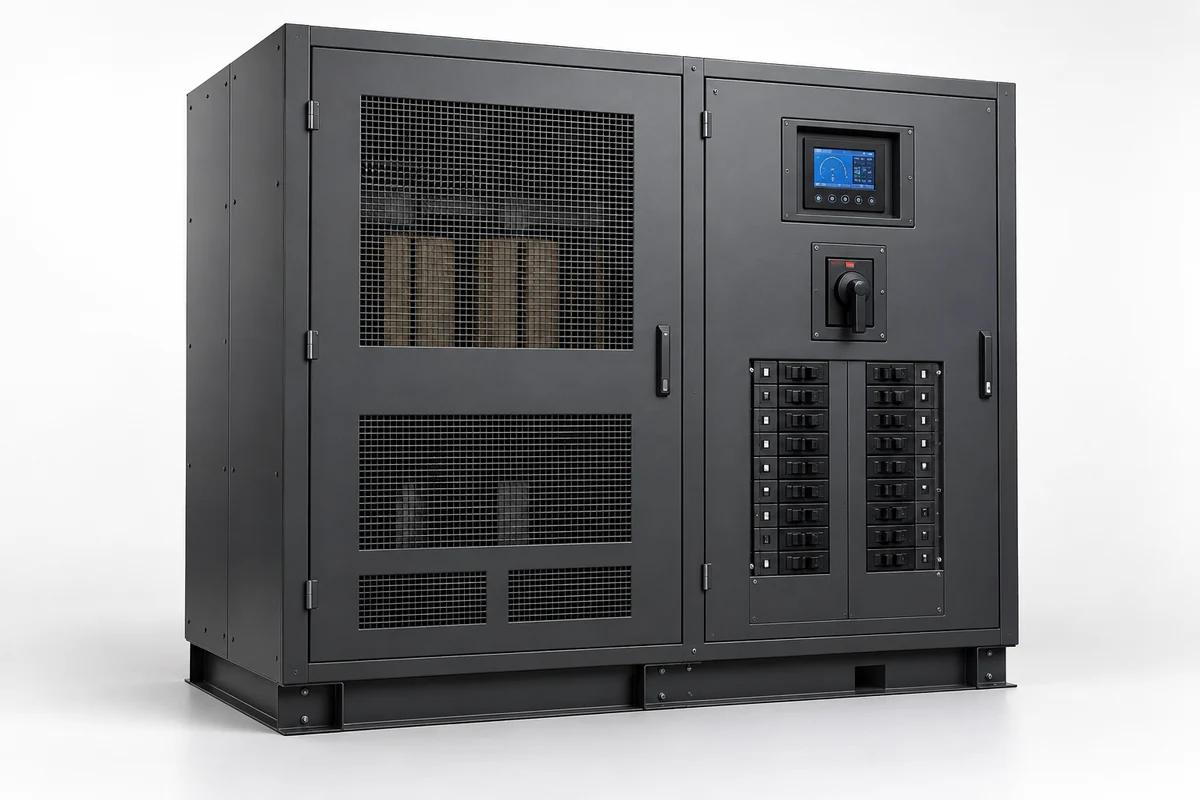
What's Included
- Energy-efficient dry-type isolation transformer
- Primary main breaker with project-specific interrupting rating
- Copper secondary bus feeding one or more panelboards
- Digital input and output metering with local display
- Front-access sections for routine operation and maintenance
- Factory electrical and functional testing with documented results
- +K-4, K-13, or K-20 transformer for harmonic-rich loads
- +Electrostatic shield and 200% rated neutral
- +Branch circuit monitoring with alarm and trend data
- +Dual-input, maintenance bypass, or redundant distribution arrangements
- +Surge protection, ground-fault monitoring, and harmonic filtering
- +Modbus TCP, BACnet/IP, or SNMP communications
Full Specifications
| Parameter | Value |
|---|---|
| Capacity | 15 to 500 kVA typical; custom ratings available |
| Primary Voltage | 208 V, 480 V, 600 V, or project-specific |
| Secondary Voltage | 208/120 V, 480/277 V, or project-specific |
| Frequency | 60 Hz standard; 50 Hz available |
| Transformer | Dry-type isolation, energy-efficient, K-rated options |
| Temperature Rise | 150°C standard; 115°C or 80°C options |
| Secondary Distribution | One or more panelboards or custom distribution sections |
| Monitoring | Input/output metering; optional per-branch monitoring |
| Enclosure | Indoor NEMA 1 standard; custom environmental ratings available |
| Communications | Modbus RTU/TCP, BACnet/IP, SNMP, or hardwired I/O |
Built to Standard



Where It's Used
- Enterprise and hyperscale data centres
- Colocation and edge-computing facilities
- Healthcare and clinical infrastructure
- Financial and telecommunications facilities
- Industrial control and process systems
- Broadcast, transit, and public-safety facilities
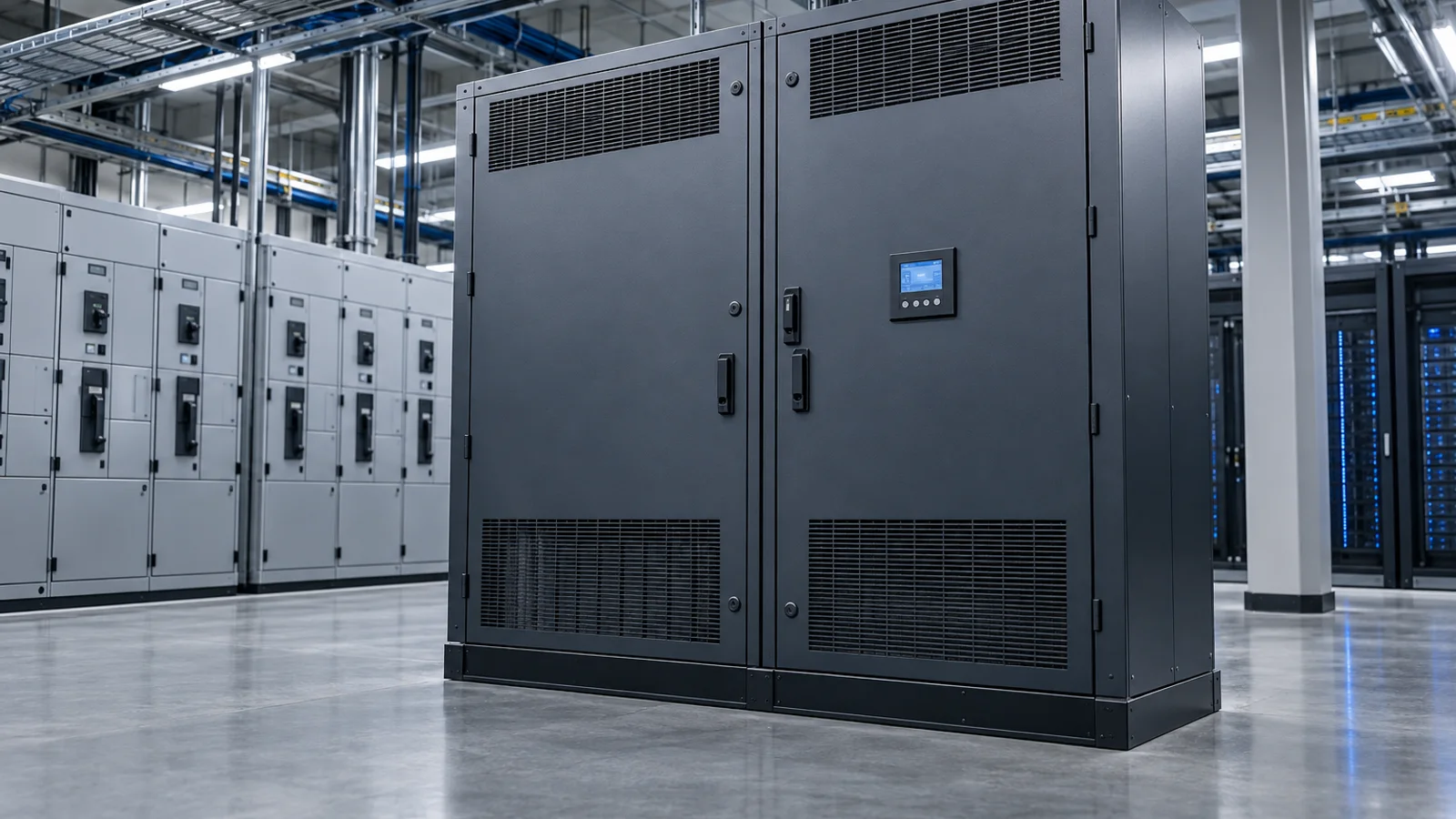
From design and specification through factory testing, commissioning, and ongoing maintenance — CANDRON delivers at every phase.
- Engineering drawings and coordination studies
- Factory acceptance testing (FAT) with full reports
- Site commissioning and protection settings
- Spare parts, training, and maintenance support
Common Questions
A PDU normally includes an isolation transformer that changes voltage and feeds integrated distribution. An RPP generally receives power at the utilization voltage and provides branch distribution closer to the loads without a transformer.
K-rated transformers are used where nonlinear electronic loads create significant harmonic current. The appropriate K-factor and neutral rating should be based on the expected load profile and harmonic study rather than selected only from connected kVA.
Yes. Main and branch metering can communicate voltage, current, power, energy, loading, and alarms over protocols such as Modbus TCP, BACnet/IP, or SNMP, depending on the selected monitoring platform.
Ready to Spec
Your Project?
Our engineering team responds with specs, lead times, and pricing the same day. Tell us what you need:
- Primary and secondary voltage, frequency, and required kVA
- Load profile, harmonic content, K-factor, and neutral requirements
- Primary protection and downstream panel schedules
- Main and branch monitoring points and communications protocol
- Available fault current, enclosure dimensions, access, and cable entry
Send us your project details and we'll respond with a price, lead time, and any clarifying questions — typically within a few hours.
Request a Quote →Or call us directly